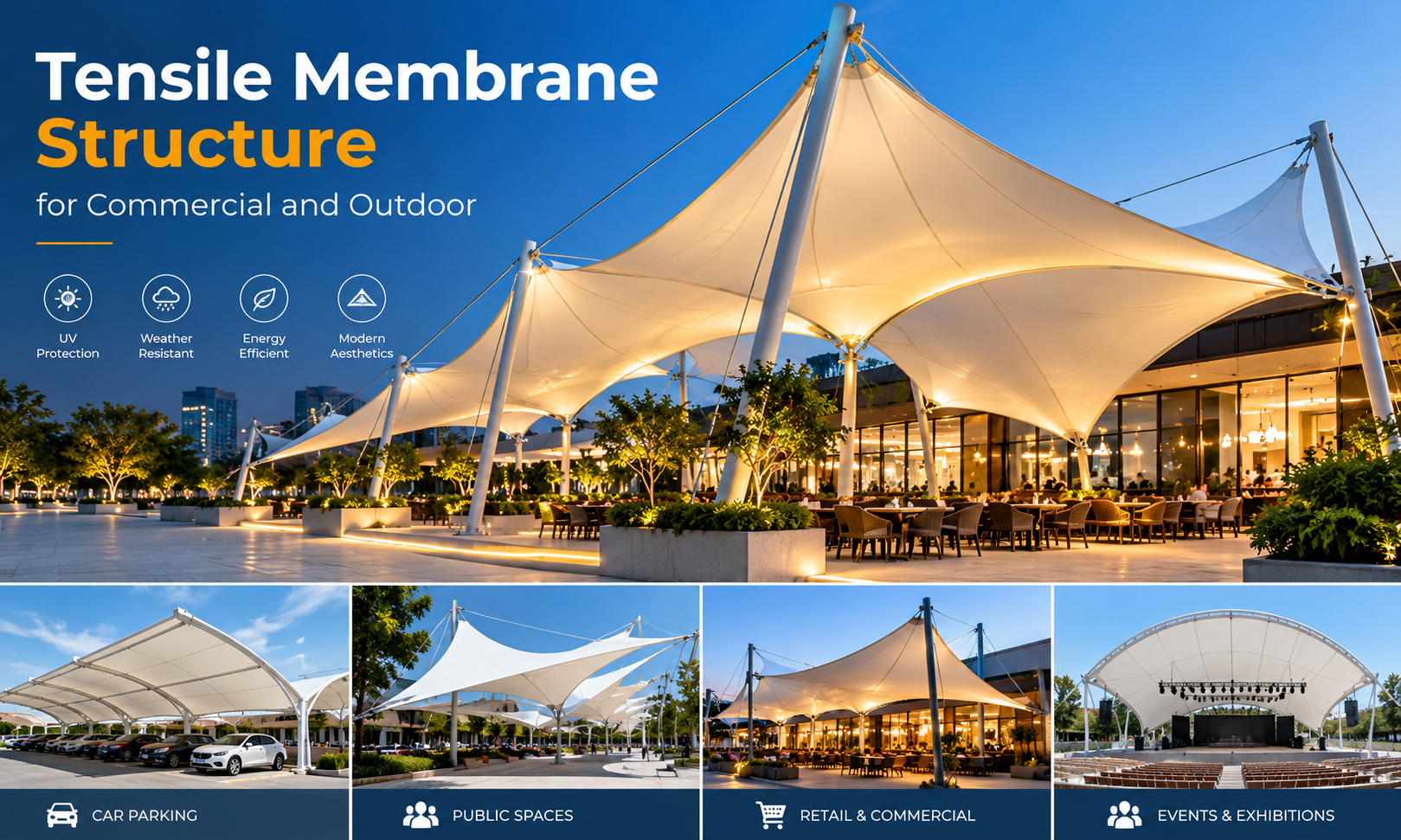
Modern commercial spaces need roofing solutions that offer protection without making the area look heavy or closed. A Commercial Tensile Membrane Structure provides a practical option for places such as hotels, shopping complexes, offices, parking areas, resorts and public spaces. Its lightweight design allows large areas to be covered while maintaining an open and attractive appearance. Unlike conventional roofing, tensile structures can also take different shapes and designs according to the space and purpose of the project.
What Is a Tensile Membrane Structure?
A tensile membrane structure uses a flexible fabric membrane supported by a steel framework. The fabric stays under tension to create a stable covered space. This construction method makes it possible to cover large areas with fewer supporting columns in many applications.
The design is not only about appearance. The structure needs to suit the site's size, weather conditions, intended use and expected load. For example, a tensile roof used over a hotel entrance may have different requirements from one designed for an industrial loading area. Proper planning helps the structure provide reliable protection while maintaining its visual appeal.
Where Are Tensile Structures Used?
Tensile structures can be adapted to many commercial and outdoor spaces. Their flexibility makes them useful when a project needs both functional coverage and an attractive architectural finish.
Common applications include:
- Car parking areas
- Hotel and resort entrances
- Swimming pool covers
- Walkways and pedestrian passages
- Outdoor dining areas
- Sports and recreational facilities
- Commercial and public spaces
- Industrial loading and storage areas
For instance, a hotel may use an Outdoor Tensile Canopy near its entrance to protect guests from direct sunlight and rain. Similarly, a residential or commercial property can use a tensile canopy over parking areas to provide shade without creating a bulky structure.
Why Choose a Tensile Roofing Structure?
A Car Canopy Manufacturer can offer several practical advantages when it is designed and installed correctly. Its lightweight construction can reduce the visual and structural heaviness associated with traditional roofing. The fabric also allows designers to create curved and modern forms that can complement the architecture of a building.
Some important benefits include:
- Lightweight construction
- Flexible and modern designs
- Protection from sunlight and rain
- Suitable for large open areas
- Better use of outdoor space
- Low routine maintenance
- Customizable size and appearance
However, performance depends on the quality of the fabric, framework, engineering and installation. Choosing materials only on the basis of price can affect the long-term value of the project.
What Should You Consider Before Choosing One?
Before installing a tensile structure, consider where it will be used and what type of protection you actually need. The size of the area, local weather, wind exposure, drainage requirements and expected usage should all be considered during the planning stage.
Fabric quality is equally important. Outdoor structures remain exposed to sunlight, rain and changing temperatures, so the membrane should be selected according to the conditions it will face. The steel framework should also receive suitable protection against corrosion to support long-term outdoor use.
It is also worth checking the manufacturer's previous work. An experienced Fabric Tensile Structure Manufacturer should be able to explain the material specifications, structural design, installation process and maintenance requirements instead of simply offering a price.
Choosing the Right Tensile Structure Manufacturer
The manufacturer plays an important role in the final quality of a tensile project. A reliable Tensile Membrane Structure Manufacturer should understand the practical requirements of the site and provide a solution based on the actual application.
Before finalizing a supplier, check their experience with similar projects, fabrication capabilities, material quality and installation services. Ask about the expected project timeline and how the structure will be maintained after installation. These details can help businesses avoid unnecessary repairs and make a more informed investment.
Conclusion
Tensile membrane structures offer a useful combination of protection, design flexibility and practical outdoor coverage. From commercial parking areas and hotel entrances to walkways, recreational spaces and industrial applications, they can be customized to suit different project requirements.
The best results come from choosing the right design, fabric and supporting framework for the specific site. If you are planning a commercial or outdoor roofing project, compare experienced manufacturers based on quality, technical expertise and previous work rather than selecting a solution only because it has a lower initial price.